Most posture correctors are gimmicks. That’s not the hot take; that’s what the peer-reviewed literature actually says, and it’s what anyone who has bought a shoulder brace, worn it for two weeks, and then found it at the bottom of a desk drawer already knows.
That said, there are products in this category that work. One specific type works meaningfully better than the others. And even the “gimmick” category can be useful if you understand what it actually does, and critically, what happens when you do it wrong.
This article breaks down the honest version: what the science supports, what the science doesn’t, and which products are worth buying based on what you actually need.
This article contains affiliate links. If you buy through them, we may earn a small commission at no extra cost to you.
Top Picks at a Glance
| Product | Category | Price | Best for |
|---|---|---|---|
| Upright GO 2 | Active feedback | ~$100 | Best overall; trains habit through vibration |
| Truweo | Passive brace | ~$25 | Cheapest test of whether wearable cuing helps |
| Marakym | Passive brace | ~$28 | Larger frames / plus size |
| ComfyBrace | Passive brace | ~$28 | Best adjustability |
| Berlin & Daughter | Passive brace | ~$48 | Best premium fabric |
| FlexGuard | Passive brace | ~$30 | Best for under-clothes wear |
| BetterBack | Sitting trainer | ~$55 | Best for the sitting half of the day |
Do Posture Correctors Actually Work?
The short answer: yes, while you wear them. The longer answer is where most product reviews stop being honest.
Passive shoulder braces (the ones that pull your shoulders back with straps) produce measurable spinal alignment changes during wear. There is peer-reviewed evidence for this. What those studies also show is that the effect is mostly gone a few weeks after you stop wearing the device, because you never actually trained the muscles to hold that position. The brace did the work for them.
Worse, wearing a passive brace continuously can accelerate this problem. If you strap your shoulders back for 8 hours a day, the muscles responsible for scapular retraction get progressively weaker because they’re not doing their job. You become dependent on the brace. This is the detail almost no product review in this space mentions, and it’s the single most important thing to know before buying.
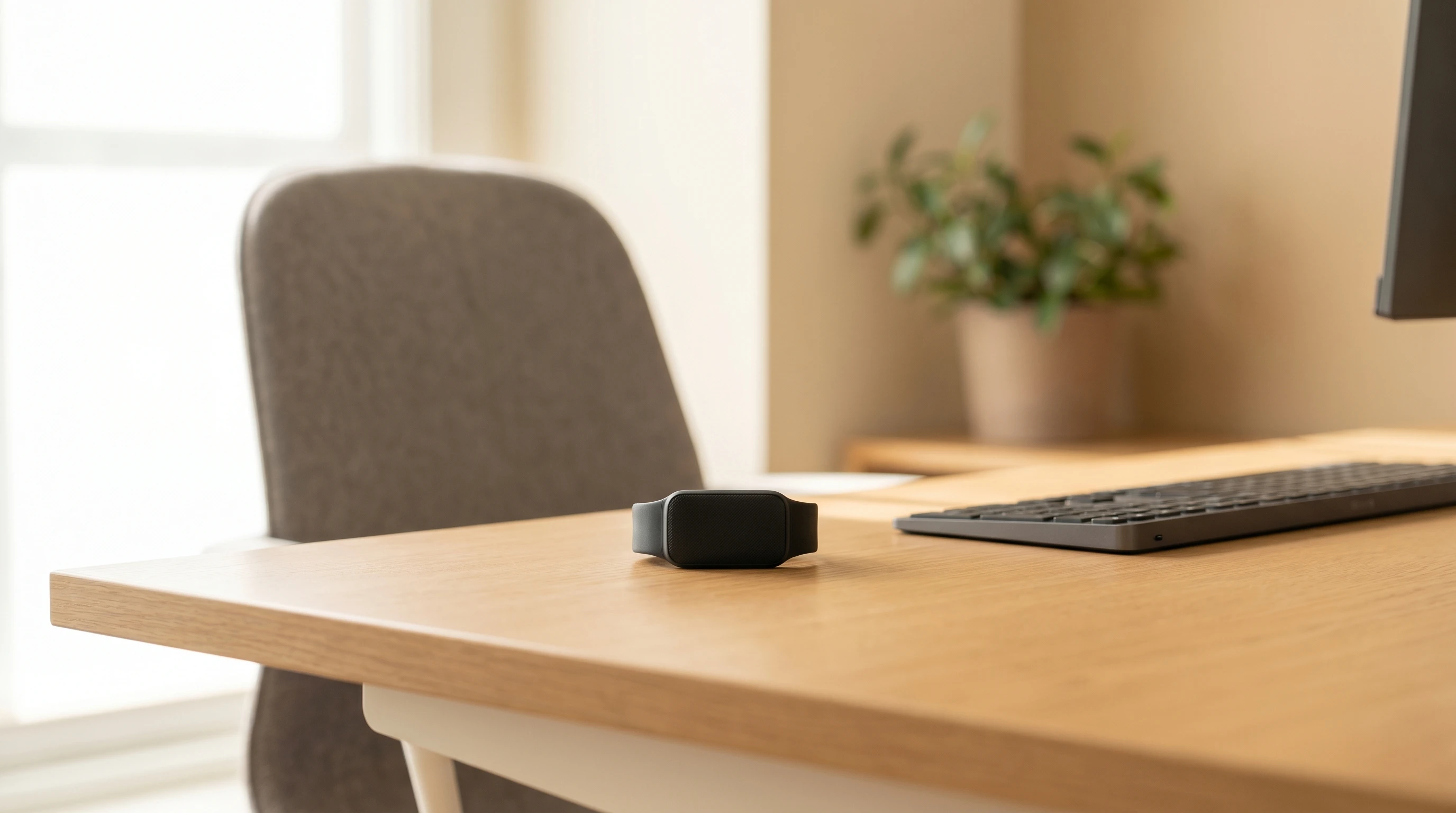
The category that has meaningfully better evidence is active feedback devices. The Upright GO 2 (the category leader) adheres to your upper back and vibrates when you slouch. It doesn’t physically hold your posture. It trains you to notice and correct it yourself. The habit-formation data for this type of device is stronger than for passive braces because you’re building a behavior, not outsourcing the job to a strap.
The third category (sitting trainers like BetterBack) works on a different mechanism altogether. It locks your pelvis into a neutral tilt while you’re seated. This matters because most desk-worker posture problems start at the pelvis, not the shoulders.
Bottom line: passive braces are cue tools, not fixes. Use them in short blocks. Active feedback devices are the only category with retained habit data. The real long-term fix is your chair, monitor height, and movement habits.
The Real Fix for Desk-Worker Back and Neck Pain
Before we get to the product picks: if you’re serious about fixing posture, you need to understand why desk work breaks it in the first place.
The sequence is called the postural cascade. It starts at the pelvis. When you sit on most chairs for any length of time, your pelvis tilts backward and your lumbar curve flattens. That flattening pulls your thoracic spine into a kyphotic (forward-rounded) curve. The forward thoracic curve sends your head forward to rebalance, because your brain wants your eyes level. Every inch your head moves forward adds roughly 10 lbs of effective load to your cervical spine. By the time you’ve been sitting hunched for two hours, your neck is holding the equivalent of 30-40 lbs instead of 10-12.
A shoulder brace doesn’t fix this. It addresses the symptom at the thoracic level while leaving the pelvis and head untouched.
The actual ergonomic stack that fixes the problem:
- Chair with real lumbar support: something that holds the natural inward curve at your lower back and prevents pelvic tilt
- Monitor at eye level: center of the screen at or just below eye level so your head stays neutral
- Movement breaks every 30-45 minutes: standing up and walking breaks the postural cascade at the source
A posture corrector is layer four, not layer one. If you haven’t addressed the first three and you’re expecting a shoulder brace to fix your back pain, you’ll be disappointed.
For a full setup walkthrough, our standing desk ergonomics setup guide covers chair height, monitor distance, and movement scheduling in detail. If you’re building from scratch on a budget, the complete ergonomic desk setup under $300 covers all of it in one place.
The Best Posture Correctors for Desk Workers
Upright GO 2: Best Overall
If you’re going to buy one posture device and actually expect a lasting result, this is the one. The Upright GO 2 is an active feedback device: it adheres to your upper back with a reusable adhesive strip and vibrates when you deviate from the upright posture profile you calibrate during setup. You train with it in sessions (typically 15-30 minutes per day) and it logs your posture data in a companion app.
The reason this leads the list is the mechanism. A passive brace holds your posture for you. The Upright GO 2 trains you to hold it yourself. The distinction matters in terms of long-term outcomes. Upright reports measurable behavior change in their user base over multi-week training programs, and independent peer-reviewed reviews of wearable vibration-feedback devices support this category as more effective at retained habit change than passive devices.
How it works: Calibrate once to your upright baseline. The device only vibrates when you deviate by a set threshold; you can make it more or less forgiving as your training progresses. The app shows session history, slouch frequency, and whether your baseline is improving over time.
Who it’s for: Desk workers willing to spend $100 once, who want to approach posture as a habit-building project rather than a “wear a brace and hope.” Also the right pick if you’ve already tried a passive brace and found it useless after the first two weeks.
Honest caveats: Requires adhesives; the sticky strip is reusable but wears out over time, and replacement packs run about $15 for 10. Not waterproof. Requires a smartphone with Bluetooth. The training program only produces results if you stick with it for 2-3 weeks consistently.
Price: ~$100
Truweo Posture Corrector: Best Cheap Cue Brace
The Truweo is the honest answer when someone asks for the cheapest way to test whether wearable posture cuing helps them. It’s frequently the #1 bestseller in the Amazon posture corrector category, and the reason is that it works reasonably well for what it does: a soft reminder to pull your shoulders back.
The patented underarm padding is a real improvement over the no-name white-label braces in this price range. It reduces the “straps digging in” problem that makes most cheap braces wearable for about 20 minutes before you take them off.
How it works: Lightweight figure-8 shoulder harness. Wearing it physically pulls your shoulders back. Works only while worn; the cue stops the moment you take it off.
Who it’s for: The skeptic who wants to spend the minimum possible to find out whether wearable cuing does anything useful for them before committing to the Upright GO 2.
Honest caveats: Passive brace; the cue exists only while worn, and wearing it too long weakens the muscles doing that job. Limit to 30-60 minute sessions. Don’t wear it all day expecting results.
Price: ~$25
Marakym Posture Corrector: Best for Larger Frames
Most shoulder braces are cut for smaller to medium chest sizes. Marakym has a wider sizing range than the Truweo and ComfyBrace, which matters if you’ve bought a cheap brace before and found it too tight across the chest or too narrow in the shoulder straps.
The neoprene-and-mesh construction feels more substantial than the Truweo without being bulky. It includes kinesiology tape and a carry bag in the kit, which is thoughtful for the price range. The breathable mesh back panel also makes it less uncomfortable in a warm office than fully neoprene designs.
Who it’s for: Larger-frame desk workers who have been excluded by standard sizing; readers who want a slightly more substantial build over the Truweo.
Honest caveats: Same passive-brace caveat as all the braces in this section; it works as a cue while you wear it, not as a fix. The neoprene construction also shows through fitted shirts more than thinner options like the FlexGuard.
Price: ~$28
ComfyBrace Posture Corrector: Best Adjustability
The ComfyBrace sits between the Truweo and the Berlin & Daughter on price and build quality. The selling point is strap adjustability (more fine-grained than most braces in this price range) which lets you tune the fit more precisely than a one-tension-fits-all design.
It also comes with a lifetime warranty, which is uncommon at this price point and useful given that straps and hardware are the failure point on most braces after a few months of daily use.
Who it’s for: Readers who want to micro-tune a brace to their body. If you’ve found other braces uncomfortable because the tension felt either too loose or too tight and you couldn’t adjust it, this one gives you more range.
Honest caveats: Some users report the underarm strap digs more than the Truweo at comparable tension settings. Try it on before deciding the tension is right. Same passive-brace cue-only caveat applies.
Price: ~$28
Berlin & Daughter Posture Corrector: Best Premium Fabric
If you want a brace that doesn’t feel like a budget product, the Berlin & Daughter is the step up. The stretchy dura-stitch fabric is noticeably higher quality than the Truweo or Marakym, and the two wear positions (sternum strap or belly strap) give you more options for how the brace sits on your body.
It also comes with a lifetime warranty. At around $48 it costs roughly twice the Truweo, which is real money for what is still a passive cue device.
Who it’s for: Readers who value build quality and won’t buy something that looks or feels cheap. Also useful if you want something that holds up to daily wear for a year or more; the fabric construction is more durable than budget neoprene.
Honest caveats: The higher price doesn’t change the underlying mechanism. It’s still a passive cue device with the same evidence base (and limitations) as the rest. You’re paying for material quality and fit, not for better posture outcomes.
Price: ~$48
FlexGuard Posture Corrector: Best for Under-Clothes Wear
The FlexGuard is specifically designed to be invisible under work clothing. The thin breathable fabric runs cooler than neoprene and sits lower-profile under a dress shirt or fitted top than the Marakym or ComfyBrace.
It also comes with an exercise booklet, one of the few products in this category that actually acknowledges you need to pair the brace with something active to see real results. That alone makes it notable in a product space full of braces that pretend wearing them is enough.
Who it’s for: Desk workers with video calls or office dress codes who need to wear a brace and not have it show under clothing. Also for people who run warm; the breathable fabric makes a difference if your office is heated.
Honest caveats: The less aggressive shoulder pull compared to the Truweo is a feature or a bug depending on what you want. Some readers prefer the lighter touch; others find it doesn’t feel like it’s doing anything. Same passive-brace limitations apply.
Price: ~$30
BetterBack: Best for the Sitting Half of the Day
BetterBack is a different product than everything else on this list, and it’s worth understanding why before you buy it.
It’s not a shoulder brace. It’s a sitting trainer: a strap that wraps around your lower back and under your knees to lock your pelvis into a neutral tilt while you’re seated. The mechanism is aimed at the postural cascade at its source: pelvis position. When your pelvis is held in neutral tilt, the rest of your spine follows naturally: lumbar curve is maintained, thoracic kyphosis is reduced, and the forward head position improves.
The Upright GO 2 handles the standing and moving part of your day. The BetterBack handles the seated part. They pair well if you want to address both.
It’s Shark Tank-famous, which usually makes me skeptical, but the mechanism is sound and it has real traction in physical therapy communities. The evidence base for proper pelvic positioning during seated work is strong.
Who it’s for: Readers who do long focused seated blocks and want their pelvis held in neutral during them. Also the right pick if your primary issue is lower back pain specifically, rather than upper back or shoulder rounding.
Honest caveats: Only works while sitting; it’s not useful if you’re standing or walking around. Looks unusual; most users wear it during focused work blocks and take it off for everything else. It is not a substitute for a good chair, but it can meaningfully improve the ergonomics of a mediocre one.
Price: ~$55
How to Actually Use a Posture Corrector (Without Making Things Worse)
The one thing that will undermine any posture corrector (passive brace or active feedback device) is wearing it continuously.
The 30-60 minute rule: Use the brace during focused blocks. Deep work, video calls, reading. Take it off between sessions. Your postural muscles need to do their own work; if you outsource that job to a brace all day, they weaken. This is the mistake most people make, and it’s why so many people end up needing the brace more over time instead of less.
Pair it with strengthening: The muscles responsible for pulling your shoulders back and maintaining thoracic extension are the same muscles that atrophy under a passive brace if you overuse it. Rows, face pulls, doorway pec stretches, and chin tucks target exactly this. You don’t need a gym; a resistance band does all of it. Even five minutes after wearing the brace is better than nothing.
Don’t wear during exercise. A passive brace restricts your range of motion and creates a false sense of stability. During any exercise that involves arm or shoulder movement, it’s counterproductive and potentially a sprain risk.
Use it as a diagnostic, not a crutch. If wearing the Truweo for a few weeks convinces you that you hold your posture better with shoulder support, that’s useful information; you now know the Upright GO 2 is worth the investment. If wearing it does nothing, that’s also useful; you need to address the root cause (chair, monitor height, movement breaks) before the cue tool has anything to work with.
If you’re thinking about your monitor height as part of the posture picture, the standing desk height guide has the calculations for sitting eye level as well as standing. Movement break frequency matters too; research generally supports breaking every 30-45 minutes rather than trying to optimize a single correct ratio. If you split your day between sitting and standing, how long to stand at a standing desk covers realistic schedules.
The Bottom Line
Most posture correctors are cue tools, not cures. A passive shoulder brace will remind you to sit straighter while you’re wearing it. It won’t train your muscles to do it on their own, and worn too long it actually makes them weaker at the job.
The Upright GO 2 is the only product on this list with a mechanism that produces retained behavior change; vibration feedback trains the habit rather than outsourcing it. It’s $100, which is real money, but it’s also the only category where the peer-reviewed evidence says you’re getting something that lasts.
If you want to test the concept cheaply first, the Truweo at $25 is the honest budget pick. Wear it for 30-minute blocks, see whether the cuing changes your awareness. If it does, the Upright GO 2 is the logical upgrade.
The BetterBack is the sleeper pick; most people in this space focus on shoulder braces and ignore the pelvis, which is where most of the problem actually lives. If you do long focused seated blocks, it’s worth serious consideration as a companion to whichever shoulder option you choose.
All of these work better once you’ve also addressed the chair, monitor height, and movement breaks. That’s the setup stack that actually fixes the problem. For the full ergonomic setup walkthrough, start with our standing desk ergonomics setup guide.
If the chair or the pain itself is the bigger problem, start with how to adjust your office chair or how to fix back pain from working at a desk.